
When shopping for fine jewelry, especially engagement rings, two popular options often come up: moissanite and diamonds. More recently, lab created diamonds have entered the market as a sustainable and ethical alternative to mined diamonds. Understanding the differences between moissanite and diamonds—particularly lab created diamonds—can help you make an informed choice that fits your style, budget, and values. This article explores the key distinctions between moissanite vs diamond, highlighting the role of lab created diamonds in today’s jewelry landscape.
What Are Lab Created Diamonds?
Lab created diamonds, also called lab grown diamonds, are genuine diamonds that have been produced in controlled laboratory environments. They share the exact chemical, physical, and optical properties as natural diamonds but are created using high-tech methods such as High Pressure High Temperature (HPHT) or Chemical Vapor Deposition (CVD).
Unlike moissanite, which is a different mineral, lab created diamonds are true diamonds, offering the same brilliance, hardness, and longevity as their natural counterparts. Lab created diamonds provide an ethical and eco-friendly alternative to mined stones, often at a more affordable price.
Understanding Moissanite
Moissanite is a gemstone composed of silicon carbide. Originally discovered in a meteorite crater, natural moissanite is extremely rare, so nearly all moissanite available in the market today is lab created.
Moissanite is prized for its remarkable brilliance and fire, sometimes even surpassing that of diamonds. However, it differs chemically and structurally from diamonds, which affects its appearance and durability. Moissanite has a hardness rating of 9.25 on the Mohs scale, compared to 10 for diamonds, making it slightly less durable but still suitable for everyday wear.
Visual Differences: Moissanite vs Diamond
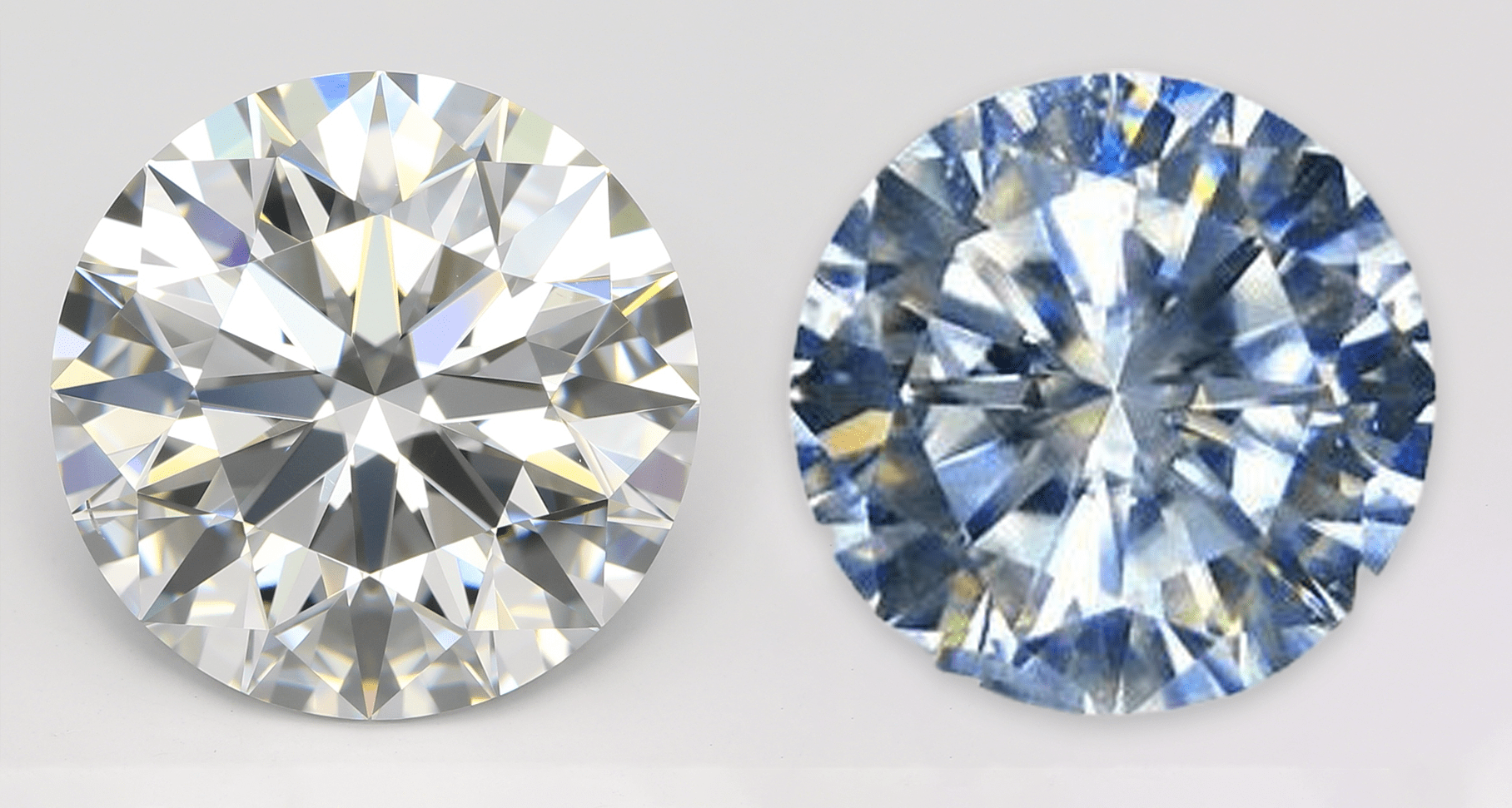
At first glance, moissanite and lab created diamonds can look quite similar. Both have impressive sparkle and clarity, but subtle differences exist. Moissanite tends to exhibit more colorful flashes or “fire,” which some describe as a rainbow effect. This can make moissanite appear more vibrant but less “diamond-like” under certain lighting.
Lab created diamonds offer a more classic, white brilliance with balanced sparkle. Because they are identical to natural diamonds, lab created diamonds provide that traditional diamond look that many buyers prefer.
Durability and Hardness
One of the key factors when choosing between moissanite vs diamond is durability. Diamonds are the hardest natural material known, scoring a perfect 10 on the Mohs scale. This hardness ensures excellent resistance to scratches, making diamonds ideal for daily wear, especially in engagement rings.
Lab created diamonds share this same hardness, making them just as durable as natural diamonds.
Moissanite, while very hard at 9.25, is still slightly softer and more prone to scratches over long periods. Although durable enough for regular use, moissanite may require more care to maintain its pristine look.
Cost Considerations
Price is often a major factor in choosing between moissanite and lab created diamonds. Moissanite generally costs significantly less per carat than diamonds—natural or lab grown. This affordability makes moissanite an attractive option for budget-conscious buyers.
Lab created diamonds typically cost 20-40% less than natural diamonds of comparable size and quality, offering a balance between cost and authenticity. For those who desire the prestige and classic appeal of a diamond but want better value, lab created diamonds provide an excellent middle ground.
Ethical and Environmental Factors
Lab created diamonds hold a clear advantage in ethical and environmental terms over both mined diamonds and moissanite. While moissanite is also lab created, it is a completely different mineral, and its mining (for natural stones) is negligible due to scarcity.
Lab created diamonds guarantee conflict-free sourcing and have a much smaller carbon footprint compared to traditional diamond mining. For consumers concerned about sustainability and responsible purchasing, lab created diamonds offer peace of mind without sacrificing beauty or quality.
Popularity and Market Trends
Moissanite has gained popularity as a diamond alternative in recent years, especially among those seeking affordable and eye-catching jewelry. However, many consumers still prefer lab created diamonds because they are real diamonds with the same qualities as natural ones.
Jewelry designers and retailers have increasingly incorporated lab created diamonds into their collections, reflecting growing demand for sustainable and ethical gemstones. As a result, lab created diamonds have become a mainstream choice for engagement rings and luxury jewelry.
Making the Right Choice: Moissanite or Lab Created Diamonds?
Deciding between moissanite vs diamond largely depends on what you value most: budget, appearance, durability, or ethics.
If affordability and dazzling fire are your top priorities, moissanite offers an impressive gemstone at a fraction of the diamond price. It is also a suitable option for those who like a unique look with vibrant sparkle.
However, if you want the authentic look and feel of a diamond with unmatched durability, brilliance, and ethical assurance, lab created diamonds are the ideal choice. Lab created diamonds deliver all the beauty and prestige of natural diamonds while being more affordable and environmentally responsible.


